Glitch Aesthetics

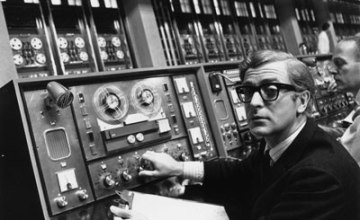
Below is the entry on “Glitch Aesthetics” I wrote for the Johns Hopkins Guide to Digital Media. As always, so much more could have been and should be written… * Glitch Aesthetics ‘Glitch’ was first used in the early 1960s to describe either a change in voltage in an electrical circuit or any kind of interference […]

Read More…

guidelines for working with PhD students

In the interests of both making sure that I can be of most use to the PhD students I work with and taking control of a key aspect of my professional life – my work as a mentor or a member/director of students’ dissertations – I’ve decided to post some guidelines I’ve come up with […]

Read More…

architecture as media archaeology as retrofuturism

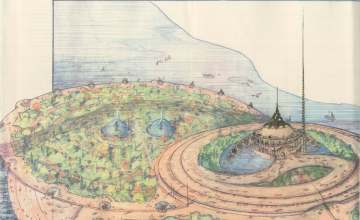
This is certainly not among the usual family of topics I blog about – dead media, media archaeology, archives, media poetics, etc. – and I know very little indeed about architecture. But I found out about these unrealized plans for a “modernized” Bagdad from my colleague Janice Ho and I couldn’t resist scanning the plans […]

Read More…

graduate seminar on media archaeology | media poetics

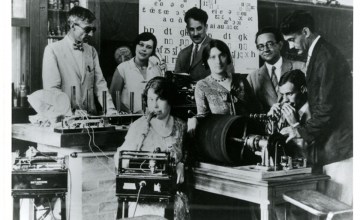
Starting tomorrow I get to teach, for the first time, a graduate seminar on Media Archaeology alongside what I call “media poetics,” or the writerly practice of exploring the limits and possibilities of given reading/writing technologies. While we will do conventional reading writing in a seminar setting, our class will also do hands-on experiments in […]

Read More…

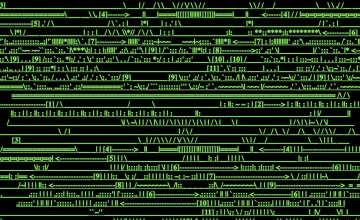
from typewriters to telematics, media noise in Robert Zend

I’ve recently started working on my next book project, at the moment titled “OTHER NETWORKS,” which will be a history of pre-Internet networks through artists’/writers’ experiments and interventions. My last book, Reading Writing Interfaces, begins and ends with a critique of Google and magic, or sleights-of-hand that disguise how closed our devices are by cleverly diverting […]

Read More…

“Computers and the Arts”, Dick Higgins (1968)

About a year ago, I was working on the third chapter of Reading Writing Interfaces – “Typewriter Concrete Poetry as Activist Media Poetics” – during which I discovered, among other things, the mutual influence of concrete poetry and Marshall McLuhan. One figure I promised myself I needed to research further once I’d finished my book […]

Read More…